


Copyright © 2025 CICSA Co-operative Credit Union Limited. All Rights Reserved.
Copyright © 2025 CICSA Co-operative Credit Union Limited. All Rights Reserved.
Apr 15, 2025

When Buying a Used Car Privately, Beware of “Curbstoning”
Auto dealers are expected to sell cars that meet certain consumer protection criteria. This may include providing a warranty that will cover the buyer’s costs if a car turns out to be a lemon. Unfortunately, some unethical dealers may attempt to bypass these laws by curbstoning. Curbstoning is when a dealer poses as a private seller to sell a car. By curbstoning, an unethical dealer can avoid having to comply with the regulations that apply to dealers. To a buyer, this could mean buying a car that has a salvaged title (a car that’s been declared a total loss by an insurance company). It could also mean unknowingly buying a car that has been in a flood and suffered severe water damage.
The term curbstoning comes from the way these transactions typically occur. When a dealer is trying to pose as a private seller, they will often sell cars from the curb or a parking lot, just as an individual would. A curbstoner often gets away with scamming buyers because he or she sells the vehicle and then disappears. With no office or contact information, a buyer can end up with a lot of headaches to deal with.
Experts say up to 80% of used cars sold through online classified ads are orchestrated by curbstoners. Follow these tips to protect yourself:
1. Type in the seller’s phone number
If you find the listing on craigslist or in an Internet classified ad, do an online search for the phone number to see if it is linked to other car ads. If the seller is selling multiple cars, that’s a red flag. You will know that this is not the seller’s private car, which might indicate that they are a curbstoner.
2. Just ask about “the car”
Don’t say too much—be purposefully vague and just ask “about the car” without giving any details. If the seller responds with “Which car?”, you’ll know that he or she has multiple cars for sale.
3. Get an inspection and a written repair estimate
Have the car inspected by a mechanic before you buy it. If you don’t have a mechanic, Google and Yelp are good places to read reviews of local shops. It’s a smart investment—a pre-purchase inspection costs about $100 and can alert you to problems you may not find yourself.
4. Get a vehicle history report
These reports can reveal vital information about the car, including whether the odometer has been rolled back or if it has a salvage title. Use the car’s vehicle identification number (VIN) to get this information. Most cars listed for sale on reputable sites provide a free history report that you can pull and view yourself.
5. Check the warranty
See if any manufacturer’s warranty is left on the car that could be transferred to you. A used car that is only a couple of years old, or that has low mileage, may still be covered.
6. Ask to see the driver’s license and title
You should always ask to see the seller’s driver’s license to see if it matches the name and address on the car’s title. If the person’s name on the title is different from the name of the person selling it to you, that’s another red flag.
7. Be wary of fictitious friends and family
Unlicensed dealers often use family and friends as part of their sales pitch. They may pretend that it’s their friend’s car, their mother’s car or “my Uncle Dave’s car.” If the seller tells you that he is selling it for his aunt, uncle or cousin, it’s likely not true.
8. File a complaint
If something does go wrong, file a complaint with your local office of consumer affairs, the Motor Vehicle Administration or state department of motor vehicles, and the state Attorney General’s Office.
Buying a car privately can be a good way to find the car you are looking for and save money. By following these tips, you’ll avoid falling prey to curbstoning. Whether you are buying a car privately or from a dealer, credit unions are often an overlooked source of legitimate and affordable auto financing. Many people make a mistake in thinking that they can’t get a loan to buy a better car, so they end up settling for a junker.
Scholarship Application Time-Savers
Successful scholarship applications take considerable time and effort. Although there’s no shortcut to a quality application, there are steps you can take to make your efforts as rewarding as possible. Tackling your scholarship search with strategy and efficiency can translate into extra applications—and therefore, extra tuition dollars. For best results, incorporate the following tips into your application process as early as possible.
Schedule recurring scholarship time in your calendar
Think of your scholarship application strategy as a regular practice, rather than a single sprint. Investing regular increments of time over several months will likely serve you better than doing an all-out application-fest over a single weekend. By turning your application process into a healthy habit, you’re better able to plan for the opportunities you want and to respond to any snags along the way. Your efforts aren’t as easy to derail and you get the added motivational boost of seeing progress over time. Treat your scholarship application time as you would a part-time job and give it a fixed time slot in your weekly schedule.
Create a master binder
To save yourself the trouble of scrambling for documents at the last minute, dedicate a binder to housing physical copies of regularly requested documents (report cards, transcripts, student ID numbers, awards/certificates, letters of recommendation, parents’ tax returns, etc.). This way, the appropriate document is only ever a quick photocopy or scan-and-print away. The master binder is also a great place to keep a list of scholarships you’ve already applied for, as well as a calendar with upcoming application due dates.
Archive your essays
Although it’s important to cater your essays to the specific requirements of each individual scholarship opportunity, there will likely be some overlap between the various essays you write. Rather than keeping dozens of essay iterations scattered across folders on your computer, print out hard copies of all your applications and archive them in your master binder (separating each application with a tab divider). The next time you find yourself staring at a blank screen waiting for essay inspiration to strike, you can thumb through the pages of past applications and borrow the bits and pieces that apply to the current opportunity. The result? You’ll beat your writer’s block and cut down on overall writing time while ensuring that your essay is fresh and unique.
Make a “cheat sheet” for online applications
While you should avoid hitting copy and paste on your application essays, you can speed up the application process by copying and pasting your basic info. Create a Word document with the bits of information that pop up frequently in online scholarship applications. Some examples of content include:
Personal info: your name, address, phone number, date of birth, email address
Academic info: name of current high school, list of current courses, expected graduation date, intended majors or areas of study, GPA or other academic scores
Parental info: names, employment, and income information for your parents or guardian
Your mini-resumé: a list of school activities, community activities, volunteerism hours, jobs and/or internships, and awards or honors you’ve received
By creating a digital cheat sheet, you’ll spare yourself from having to type out the same answers over and over again. Like all documents with personal or sensitive information, make sure you keep your cheat sheet in a safe place (password-protecting it is ideal).
Be smart about letters of recommendation
By submitting letters of recommendation, your teachers and mentors are doing you a huge and potentially life-changing favor. Think about it—their words could be worth hundreds or even thousands of dollars. It’s therefore in your best interest to make the process as easy for your letter-writers as possible. As the school year winds down, schedules get extremely busy and your teachers, coaches and employers may not have time to field every single one of your requests—even if you’ve been engaged and participative all year.
Communication is the key—schedule an appointment with your teachers and let them know that you are in the scholarship application process and could use their support with letters of recommendation. Be clear about how many scholarships you’re applying to (is it 5? 10? 30?) and then discuss some possible strategies for making it happen. Explain whether you need individual letters for each application, or whether a general letter can be repurposed for multiple applications. Provide your teacher with a resumé and be sure to highlight accomplishments you want mentioned in your letters of recommendation. If you wish to use the same letter for multiple scholarship opportunities, get permission from your teacher to edit the letter’s recipient.
Be clear about time frames and set a reasonable deadline that works for both of you. If time is an issue, see if your teacher is willing to approve and sign a letter of recommendation that you’ve written yourself. Be accommodating and flexible and don’t forget to show some courtesy—send your letter writers a thank you card, and be sure to share news of any scholarship wins with them.
________________
Time is a crucial component of a winning scholarship application. By combining best practices in time management, organization and communication, you can maximize the both quality and quantity of your scholarship applications and increase the odds of decreasing your college tuition.
Apr 15, 2025
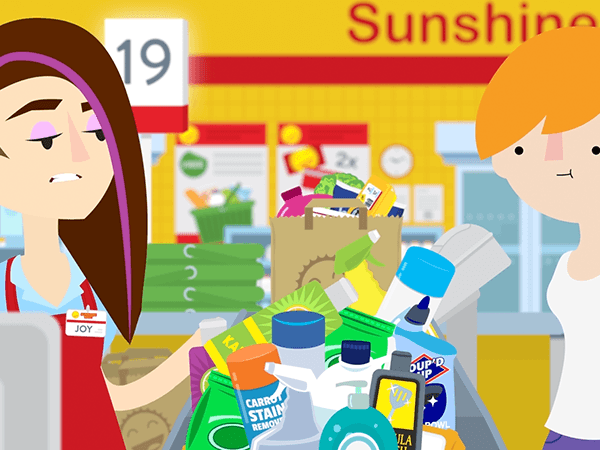
Groceries are a big monthly expense and with so many options in the store, it can be tough to make cost-effective choices. But don’t worry, there are simple ways to trim down your grocery bill without sacrificing what you need. Check out these tips to help you save while still getting everything on your list.

Apr 15, 2025
Inflation is the rate at which the prices of everyday goods and services increase. As prices rise, the purchasing power of your money decreases, meaning each dollar buys less. Even if price increases appear gradual, the long-term impact of inflation can be significant!